Ten Months After Maduro's Capture, Hegseth Unveils US-Venezuela Defense Partnership in Caracas
On November 18, US Defense Secretary Pete Hegseth visited Caracas—his first trip since US special forces captured Nicolás Maduro on January 3—to announce a new military cooperation pact with acting president Delcy Rodríguez covering joint exercises, intelligence sharing, and border security.
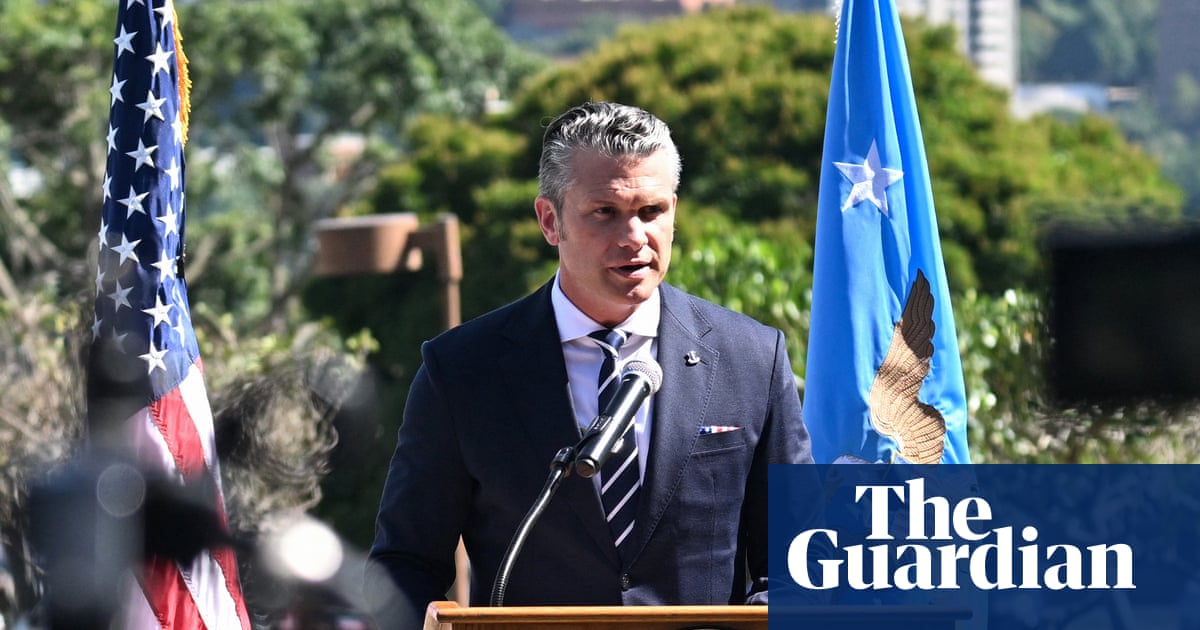
US Defense Secretary Pete Hegseth used a surprise visit to Caracas on November 18 to announce a new defense cooperation agreement between the United States and Venezuela, cementing an extraordinary realignment just ten months after US special forces abducted former Venezuelan president Nicolás Maduro 123. Appearing alongside acting president Delcy Rodríguez at the Miraflores presidential palace, Hegseth stated that both governments had signed an agreement to strengthen their armed forces and bolster border security 12. According to Reuters reporting cited by Ukrainska Pravda, the pact provides for joint military exercises, intelligence sharing, and expanded training 23.
The coverage relies on three media dispatches—The Guardian's reporting from Caracas and two Ukrainska Pravda articles citing Reuters—while no primary treaty text or formal defense memorandum has been made public in the available material 123. Hegseth framed the partnership as a major escalation against drug trafficking, claiming US and Venezuelan forces would jointly target "narco-terrorists" on Venezuelan territory and declaring, "We will hunt you down" 13. Rodríguez, who hosted Hegseth alongside Venezuelan Defense Minister Gustavo González López and Foreign Minister Oliver Blanco, welcomed what she described as the restoration of military cooperation to confront "shared threats" 12.
From the January 3 Raid to an August Oil Deal
The November 18 accord caps a rapid reversal set in motion during the early hours of January 3, 2026, when US Delta Force operatives carried out a raid ordered by US President Donald Trump to seize Maduro and his wife 13. According to US government estimates cited by Ukrainska Pravda, roughly 75 people were killed during the incursion 3. Maduro and his wife were transferred by helicopter and armored vehicle to a federal court in New York City to face charges, where Maduro remains behind bars 13. In January, Trump stated that the United States would assume leadership over Venezuela until a clear and safe transition of power took place, suggesting that arrangement could last for years 2.
Following Maduro's abduction, his former vice president, Delcy Rodríguez—once an outspoken anti-imperialist figure in Venezuela's "Chavista" movement, which has governed since 1999—became acting president with Trump's blessing 1. In late August, Trump announced a "historic" oil deal with Venezuela, calling it "the biggest oil deal in world history" as well as "the spoils" of his "conquest" 12. Hegseth claimed on November 18 that the energy agreement reportedly covers 65 billion barrels of reserves and "makes the strait of Hormuz a non-factor for the western hemisphere" 1. Earlier in November, the New York Times also reported that Trump administration officials were seeking to negotiate a long-term US troop presence in Venezuela 1.
Hegseth's Triumphalism and Rodríguez's Balancing Act
Throughout his November 18 appearances, Hegseth blended blunt triumphalism over Maduro's capture with conciliatory praise for Venezuela's interim government 1. Speaking outside the recently reopened US embassy in Caracas, Hegseth boasted that the January 3 operation was "the single most sophisticated military operation in the history of Latin America" and described himself as "the first United States secretary of war this century to set foot in Venezuela" 1. Recalling Maduro's taunt a year earlier—"Come and get me!"—Hegseth added sarcastically, "Well, we answered that call," calling January 3 "a day of liberation for Venezuela" even though Maduro's former allies retain power with Washington's backing 1. In the aftermath of the January raid, Hegseth had been among the bluntest administration voices celebrating the strike, bragging that "Maduro had his chance … he effed around and he found out" 1.
Inside Miraflores Palace, however, Hegseth praised Rodríguez's "leadership and commitment," asserting that Venezuela had transformed from "our most aggressive regional threat to [being] a compliant security partner" less than a year after the two countries' militaries were briefly at war 1. He conveyed Trump's greetings and highlighted opportunities "not just militarily … but also economically" to unlock Venezuela's resources 1. In a five-minute speech broadcast by state television VTV, Rodríguez made no mention of Maduro 1. Instead, she praised the "political and geopolitical maturity of our governments" for turning tough times into "an extraordinary space for cooperation and mutual benefit," hailed the August energy deal, and closed by wishing Hegseth "a lifetime of happiness" 1.
Venezuelan Critics and Regional Headwinds
Critics of Rodríguez's political camp drew a starkly different lesson from the ceremonies in Caracas 1. The Guardian reported that opponents viewed Hegseth's visit as a humiliating act of genuflection for a leader presiding over a country widely seen as having become a US protectorate after January's raid 1. Prominent Venezuelan journalist Luz Mely Reyes wrote on X that ten months after Maduro's abduction, Washington no longer needed to fire shots to remind everyone who holds authority, arguing that the mere presence of the January incursion's architect reaffirmed that Venezuela's "operational sovereignty is subject to the White House's directives" 1.
Reyes also suspected the trip carried a calculated message for Venezuela's armed forces, writing that domestically it "forces the military high command to legitimize the man who directed the extraction of their former commander in chief" 1. Meanwhile, the Caracas agreement unfolded shortly after a major setback for Trump's regional security diplomacy 1. In October, Trump's far-right ally Flávio Bolsonaro lost Brazil's presidential election to leftwing winner Luiz Inácio Lula da Silva, who indicated Brazil will not join Trump's "Shield of the Americas" anti-cartel coalition—making cooperation from Venezuela's interim government all the more visible for Washington 1.
What Remains Unknown and What to Watch
Major details of the new US-Venezuela defense and economic relationship remain undisclosed 123. Because neither government has released the text of the November 18 defense pact or the August energy agreement in the cited reporting, the scale and timing of joint exercises, the parameters of intelligence sharing, and whether Caracas consented to the long-term US troop presence reported earlier in November by the New York Times remain unverified 13. Also uncertain are the timetable for any eventual political transition in Caracas and the course of Maduro's federal prosecution in New York 123. Observers should watch for deployments of US personnel to Venezuela, details of border and anti-cartel operations, and reactions inside the Venezuelan military 13.
Written with AI from the cited sources and checked against them. Open the sources to verify.